How Visualization Leads to Smarter Financial Decisions
Most people set financial goals… and then forget about them two weeks later.
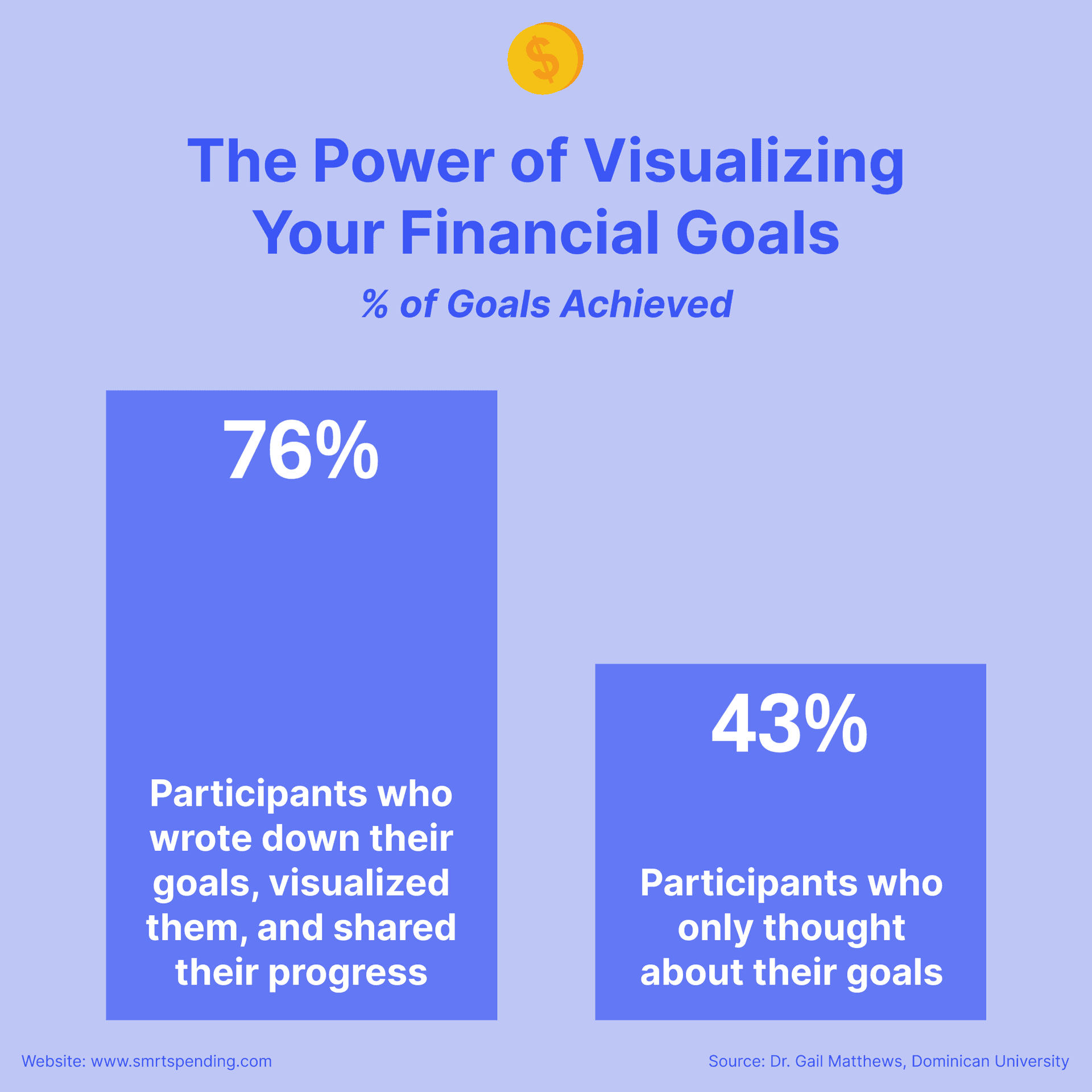
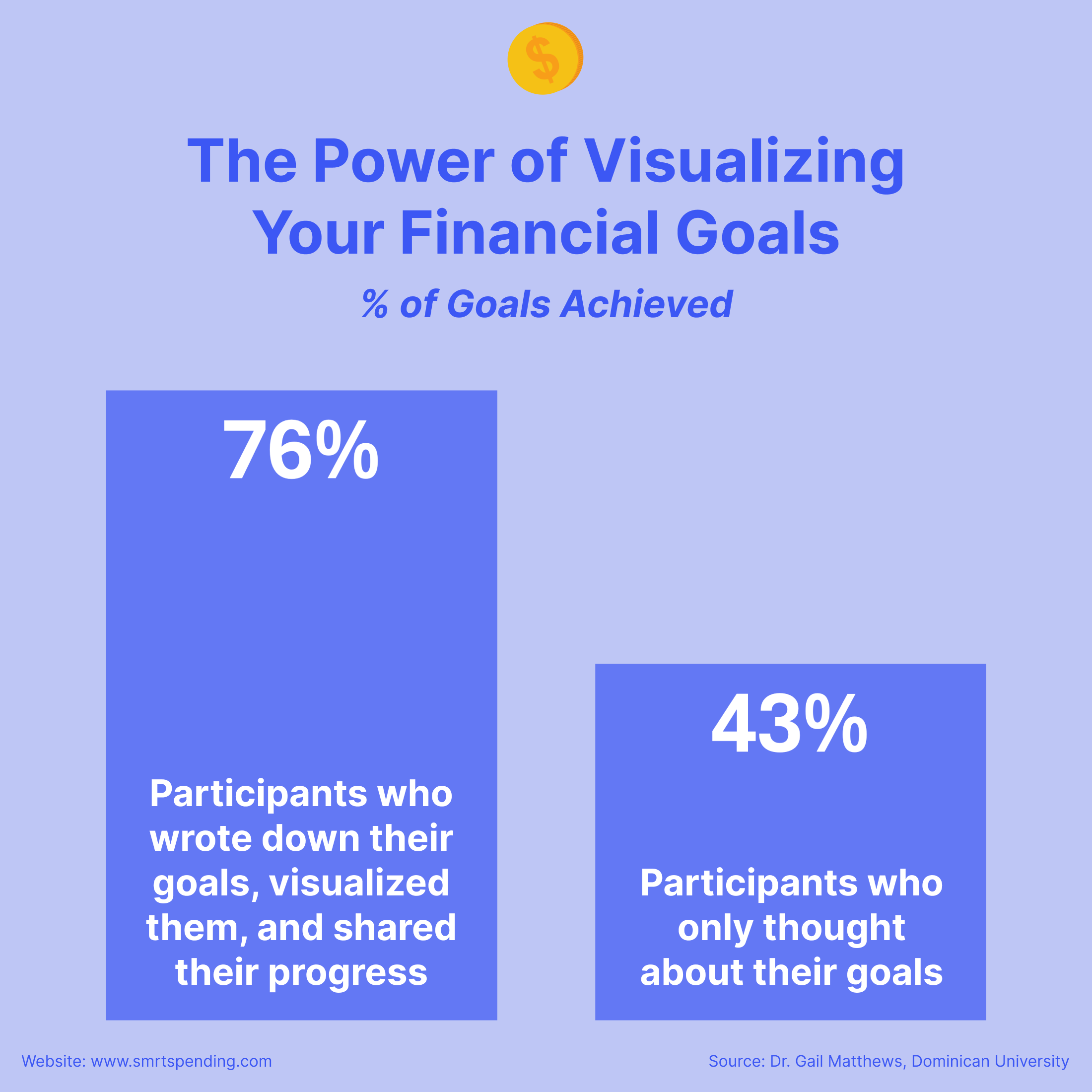
But a study from Dr. Gail Matthews at Dominican University found that people who wrote down and visualized their goals achieved 76% of them.
Those who didn’t? Just 43%.
Why Visualization Works
Visualization makes financial planning more real. It helps you understand how every choice impacts your bigger picture.
Example:
- Spend $200/month on a nicer car
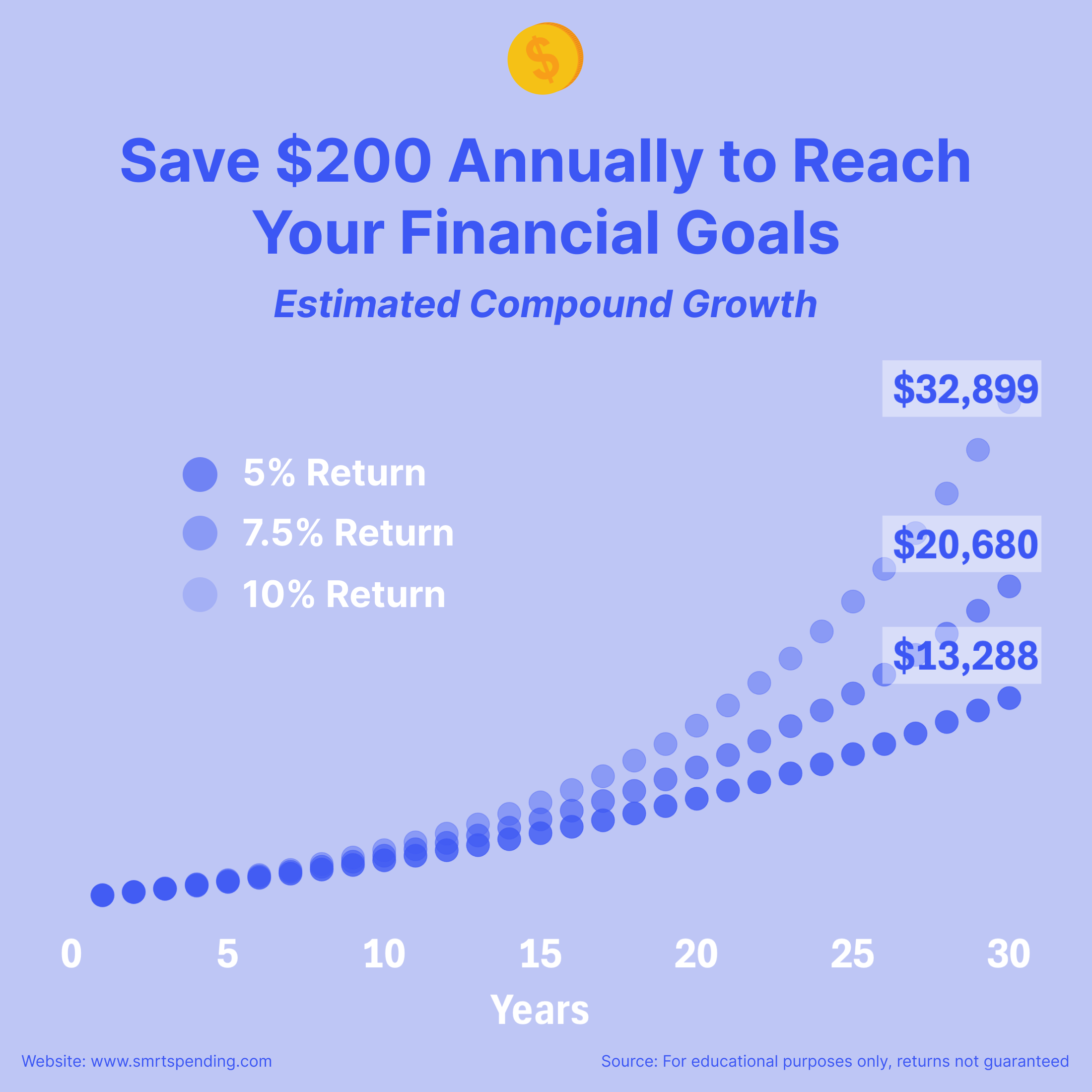
- Or invest it and end up with ~$32,000 in 10 years
When you see the trade-offs, it’s easier to make smart financial choices instead of impulse decisions.
The Hidden Cost of Not Visualizing
We make dozens of money decisions every week without thinking twice.
Take unused subscriptions: the average household wastes over $1,000/year on them. If you invested just a portion of that amount, you could build $30K+ over time.
Without visualization, those small leaks fly under the radar. With it? You start making smarter decisions, fast.
How to Get Started
- Pick one of your top financial goals and track it visually
- Use a simple tool that shows long-term cost (spreadsheet, online calculator, etc.)
- Compare two options side-by-side for better financial decision making
Final Thoughts
Achieving financial freedom isn’t about eliminating every small expense; it’s about making intentional decisions that support your long-term financial goals.
For more insights on smarter financial decision making, check out our other blog posts. We explore how both small and large choices, like your morning coffee or the down payment on your house, can have a significant impact when you understand their true cost.