How to Afford Your Mahjong Set Without Going Broke
We usually talk about ways to save. Cut back on small expenses. Think twice before big ones. Consider the opportunity cost. Delay gratification. All the tips for smarter decision making.
But here’s the thing… Money’s also meant to be used. And sometimes, that means making a financial decision purely because it brings you joy. Like a Mahjong set.
Spending with Intention
A lot of people feel guilty spending money on “non-essentials.” This blog probably contributes to that feeling.
But if it’s something you’ll actually use and enjoy, and you’ve made space for it in your financial planning, that’s not wasteful, that’s smart.
It’s the difference between:
- Buying out of impulse vs. planning for something meaningful
- Spending reactively vs. spending intentionally
We’re not anti-spending. We’re anti-random, regret-later spending.
The Price You Pay
Mahjong sets aren’t cheap, but they’re not crazy expensive either, depending on how you look at it.
| Level | Price Range | Brand |
|---|---|---|
| Starter Set | $50 – $150 | Yellow Mountain Imports Amazon |
| Mid-Range Set | $150 – $500 | Custom Acrylic Sets from Etsy The Mahjong Line ($300 – $500) |
| High-End Set | $500+ | Tiffany’s ($16,500) Hermès ($12,900) |
Let’s say you want that $500 set. Here’s how you could make it work:
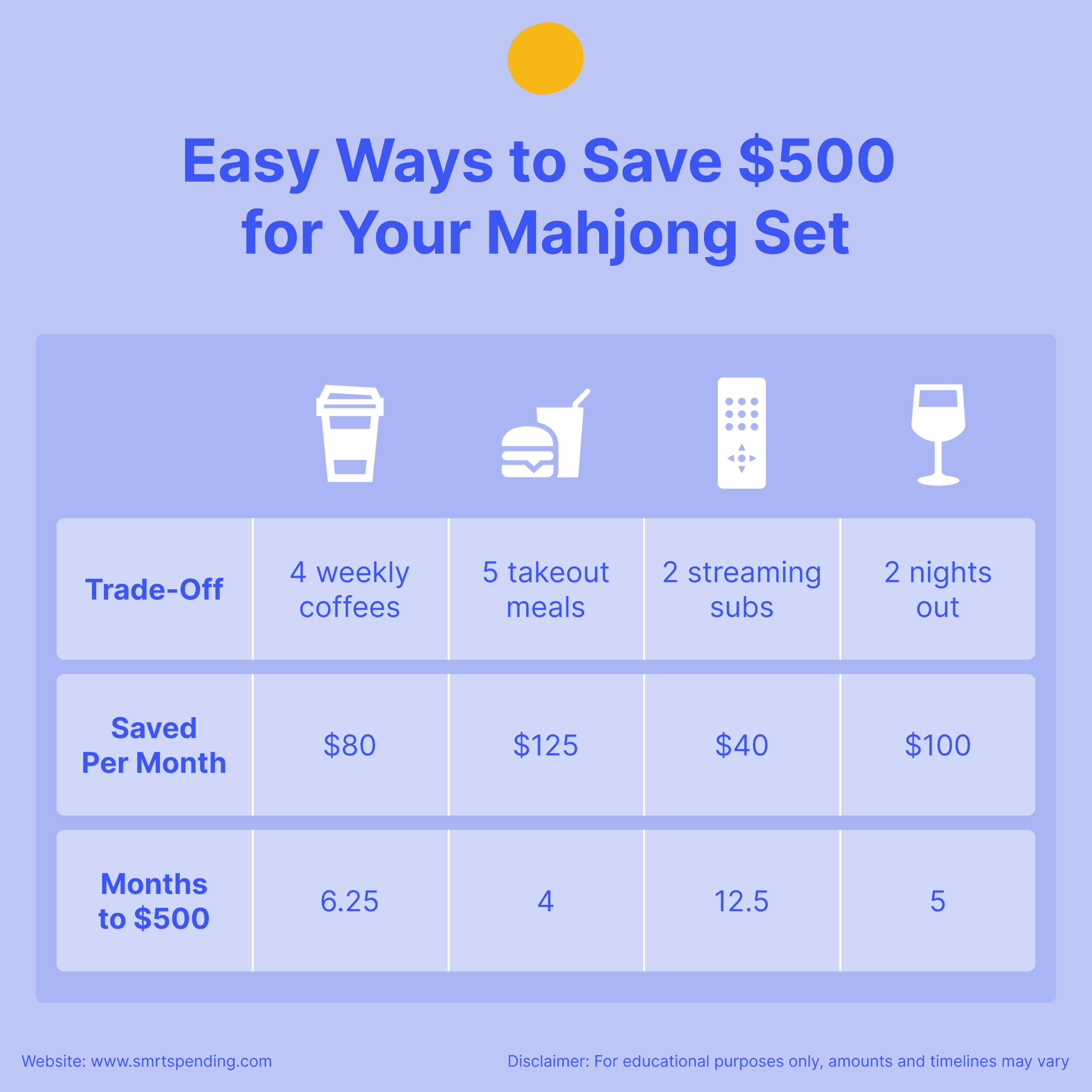
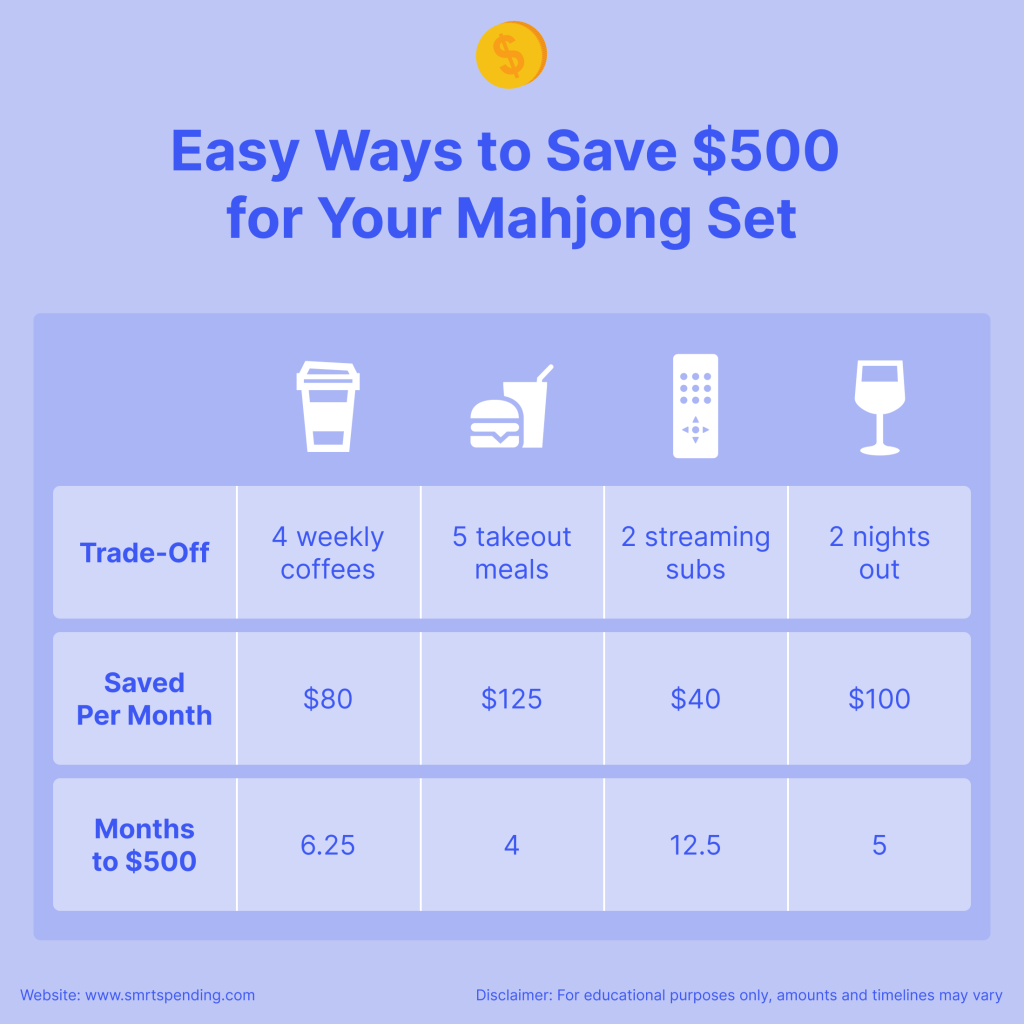
- Skip 5 takeout meals – Save $125/month → reach $500 in 4 months
- Cut out 4 weekly coffee runs – Save $80/month → reach $500 in 6.25 months
- Cancel 2 streaming subscriptions – Save $40/month → reach $500 in 12.5 months
- Skip 2 nights of going out – Save $100/month → reach $500 in 5 months
Nobody loves waiting, but delayed gratification isn’t always a bad thing. If you’re patient and stack a few of these trade-offs, you’ll hit your goal faster than you think.
You could even buy your set today if you have the extra cash, then use these trade-offs to earn it back. Who says you can’t get creative with financial planning?
Cutting Back on Coffee
Let’s dive deeper into the coffee example.
If you usually buy coffee out, cutting back just four times per week at $5 a drink adds up to $500 saved in six months. That’s enough to cover that Mahjong set.
I dove into this in another blog about how much your daily coffee habit really costs you. Spoiler: those small savings can add up to thousands over time if you stick with it.
It’s a great example of how small sacrifices today can lead to big rewards in the future, and how financial freedom is possible when you make smart financial choices.
Opportunity Cost
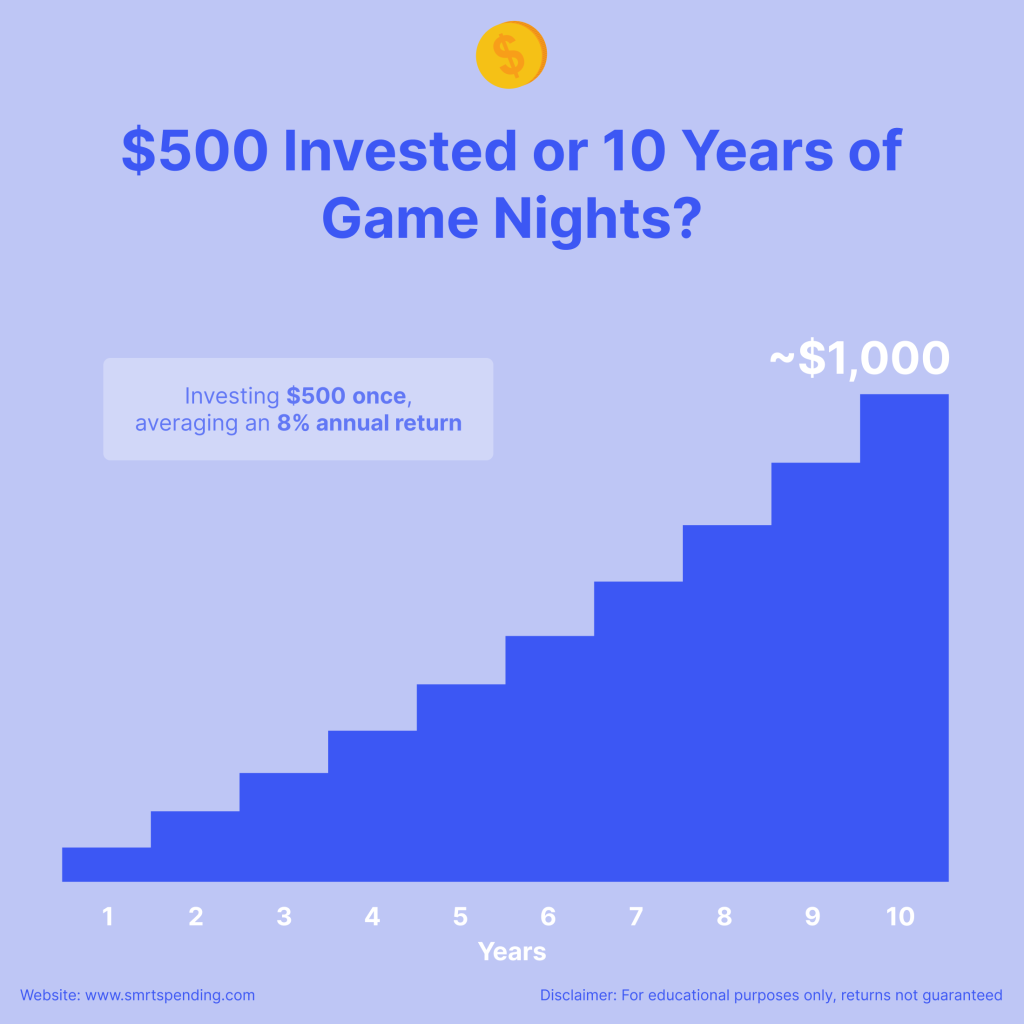
Let’s consider the other option: instead of spending the $500 on a Mahjong set, what if you invested it?
If you invested the $500 at 8% annual returns, in 10 years you’d have a little over $1,000. That’s a nice return.
But here’s the real question: what matters more to you?
Watching your money double slowly over the next decade, or using it now to create meaningful experiences, deepen friendships, and actually enjoy life along the way?
That’s where the value of something like a Mahjong set starts to show up in ways numbers can’t measure.
Numbers Aren’t Everything
Not every good financial decision is about maximizing returns. Sometimes, the smarter choice is the one that adds value to your life in a different way.
If that Mahjong set brings people together and gives you something to look forward to each week, that’s worth something.
And it’s not just a feeling. There’s research behind it.
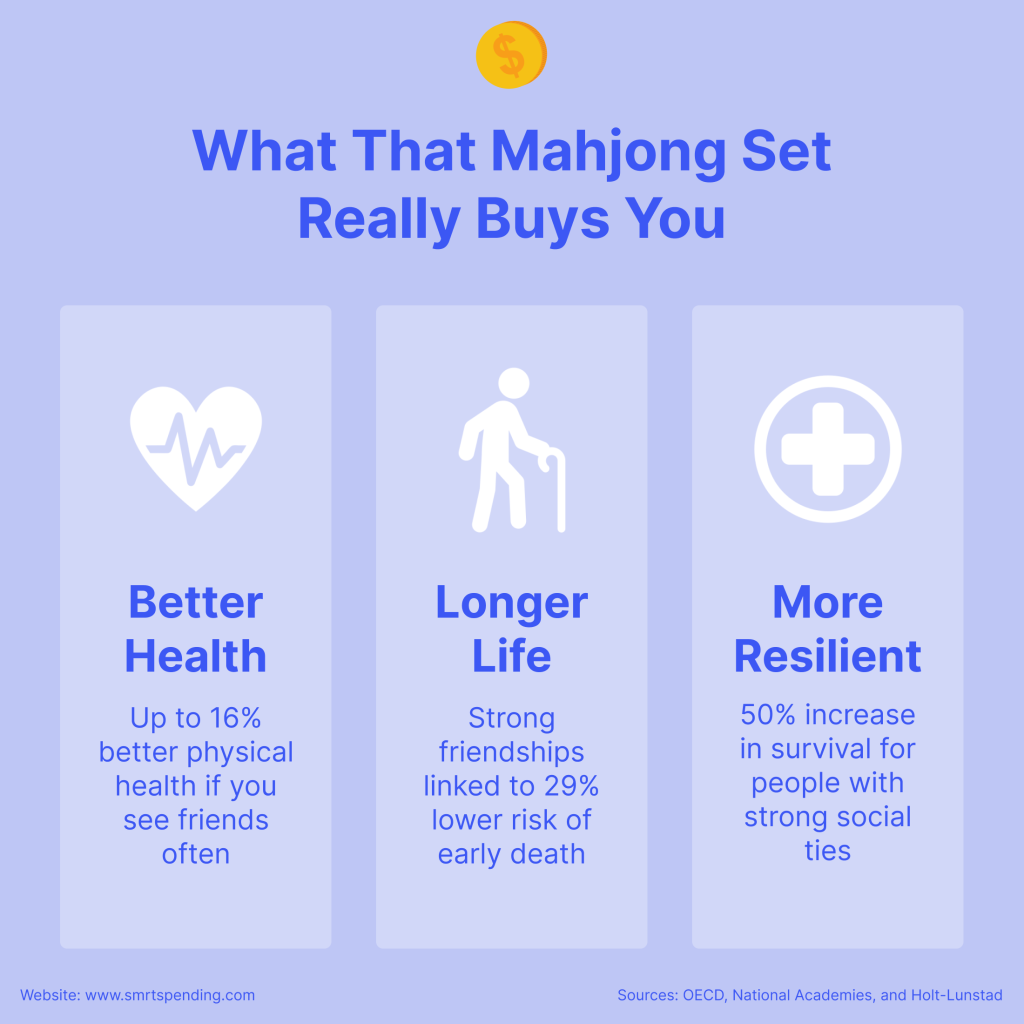
- People who regularly see friends are up to 16% more likely to report good physical health.
- Strong friendships are linked to a 29% lower risk of early death.
- Those with close social ties have a 50% higher chance of long-term survival.
So you could let that $500 sit and grow into $1,000+ over 10 years. Or you could put it toward something that supports your well-being now and for years to come.
Bottom Line
- You don’t have to sacrifice fun to be good with money
- The key is being intentional, not restrictive
- If something adds real value to your life, build it into your plan
- Small sacrifices can lead to big rewards, fast
To be honest, this post isn’t even really about Mahjong, it’s about giving yourself permission to enjoy your money.
Design your spending plan around what matters most, and you won’t feel guilty for getting that Mahjong set (or anything else you want).
For more insights on smarter financial decision making, check out our other blog posts.