How an Extra Mortgage Payment Can Save You $100K
One of the most overlooked aspects of buying a home is the total interest you’ll pay on your mortgage. In today’s high-interest rate environment, the total cost could be nearly double the loan amount.
It’s easy to overlook the long-term cost of interest when you’re focused on the immediate concerns of buying your first home, like:
- Can we afford the down payment?
- Can we handle the ongoing monthly payments?
If you’re planning to put down less than 20%, that’s a common approach, but it comes with its own set of challenges.
Regardless of the amount you put down, if you want to reach financial freedom, the key is to focus on paying off your mortgage as quickly as possible.
Save on Interest with Extra Payments
An effective way to reduce your interest costs is by making one extra mortgage payment each year. This strategy is easy to implement, and you can make that additional payment using your tax refund, year-end bonus, or any extra income.
Plus, it’s flexible. If you ever need to skip a year or delay a payment, you can. To better understand the impact, let’s visualize it using a real example.
For this example, let’s assume the following:
- $300K mortgage
- 7% interest rate
- 30-year loan
There are several factors that can affect your monthly payment, but for simplicity, we’ll stick with these basic assumptions. We’ve also excluded the down payment and are focusing only on the mortgage amount, since interest is calculated based on that.
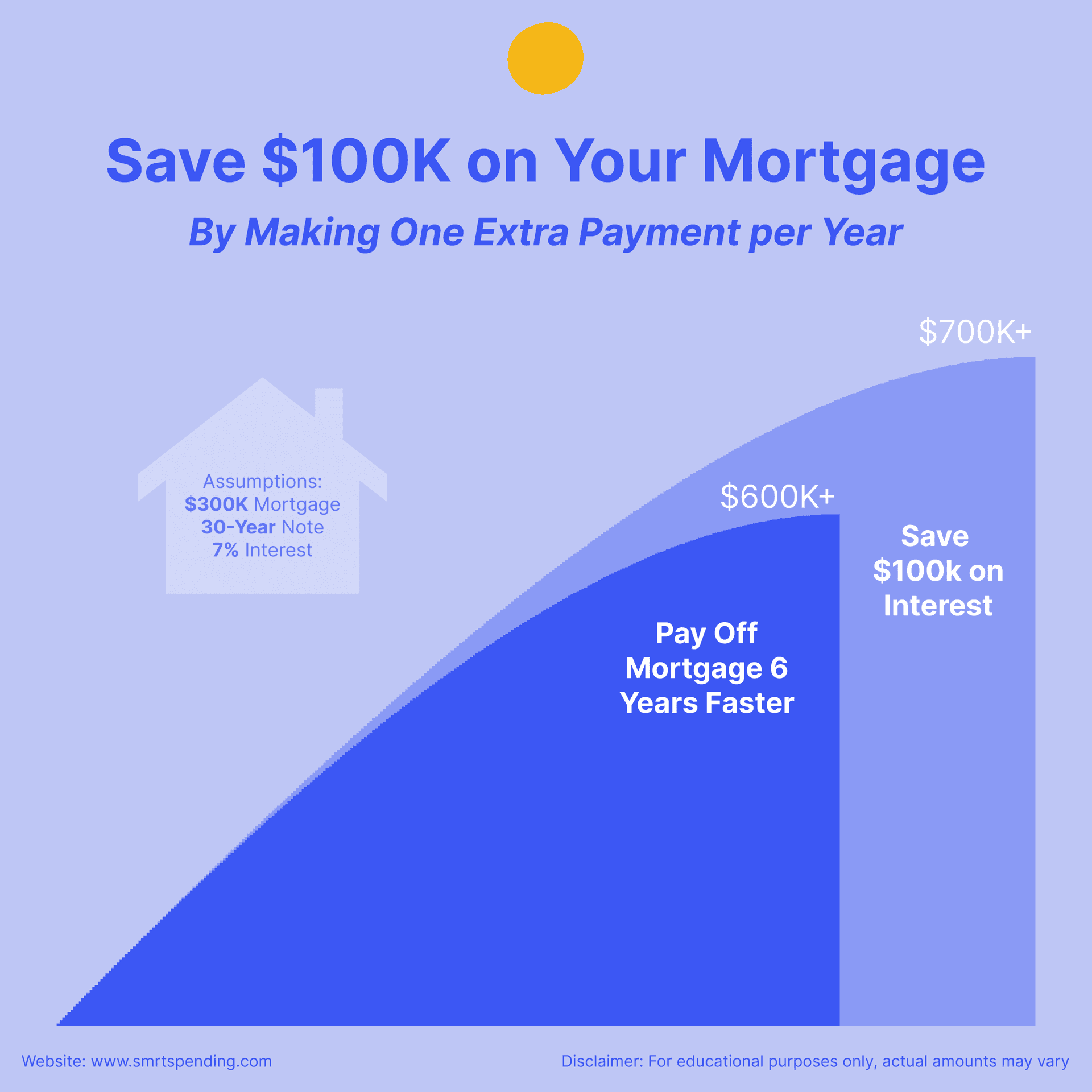
With these terms, your monthly payment would be just under $2,000. If you follow a standard payment plan, you’d end up paying around $718K over the 30 years—more than double the original loan amount.
There are plenty of great online calculators, like this free mortgage calculator, that can help you estimate the true long-term cost of your loan.
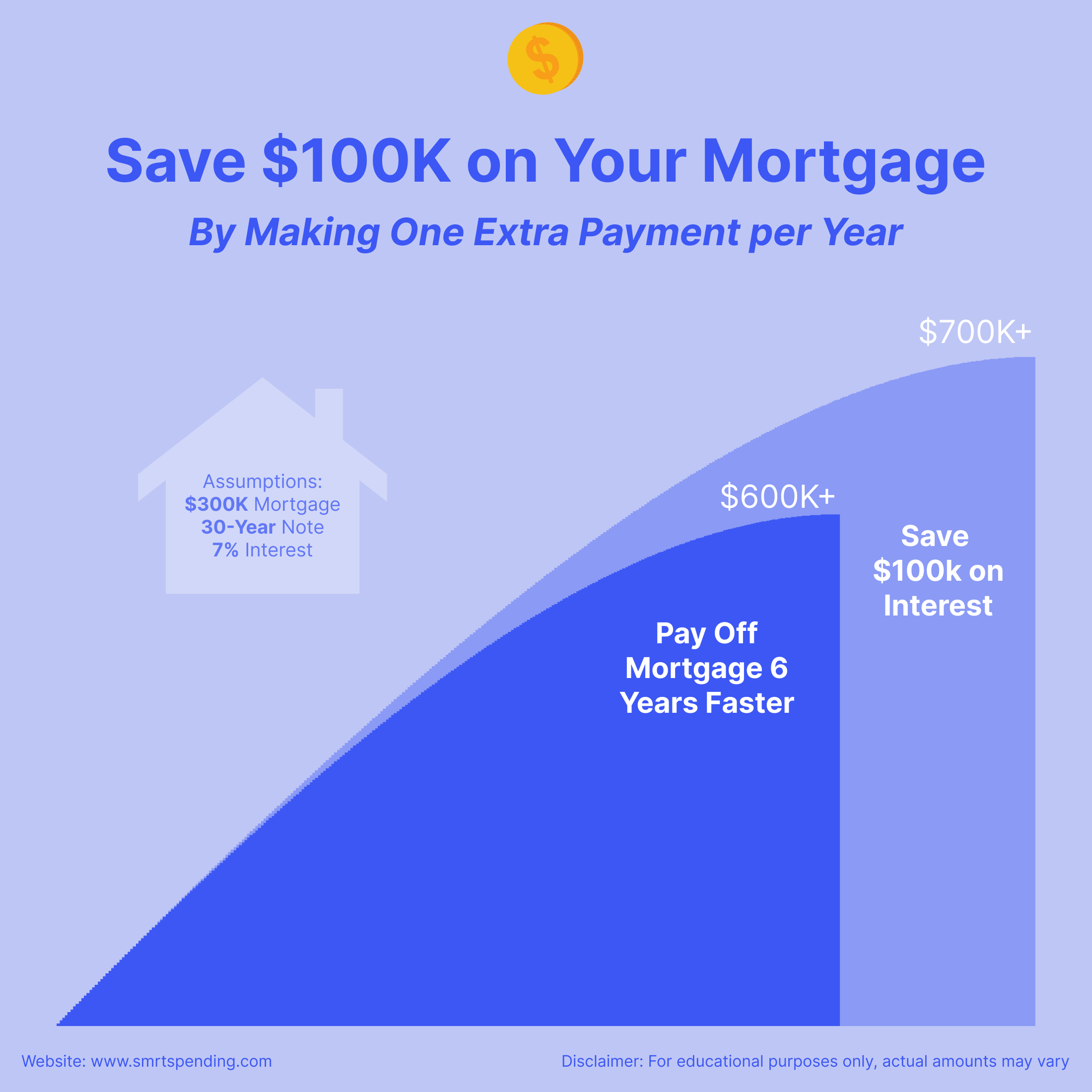
By making one extra payment each year, you could lower the total cost of your home by nearly $100K, to about $618K. You’d still be paying the $300K principal, but only $313K in interest. Plus, you’d shorten your loan term from 30 years to about 24 years, paying off the mortgage 6 years earlier than originally planned.
The magnitude of these numbers can be eye opening, but visualizing them empowers smarter decision making.
Paying Off Your Mortgage Early
When making a decision like this that could put additional pressure on your finances, it’s important to consider the opportunity cost.
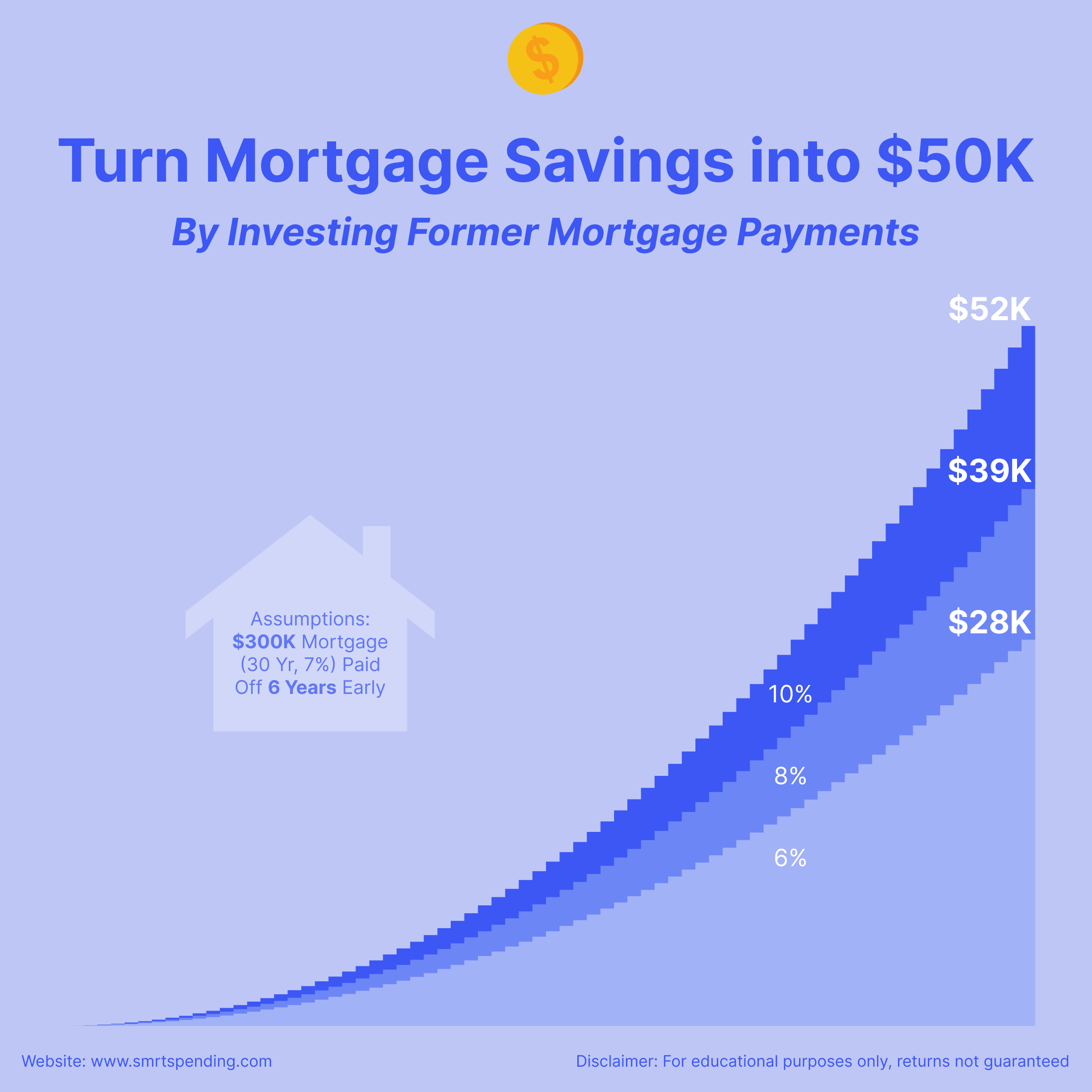
By making that extra payment each year, you’d pay off your mortgage in 24 years instead of 30. This gives you those extra 6 years—free of mortgage payments—to focus on other financial goals.
If you continue to set aside your monthly $2,000 mortgage payment but invest it instead, the growth potential is significant. With a modest 6% return, you could add $28K to your savings. With a more aggressive return of 10%, that could grow to $52K.
Final Thoughts
There’s a lot to think about here, but the main takeaway is clear: Paying off your mortgage early means less interest, and it frees you up to focus on other financial goals.
The opportunity cost of paying off your mortgage early is a big win because you can invest your extra money and let it grow with compound returns.
If you found this valuable or have any tips that have helped improve your financial decision making, leave a comment below! Don’t forget to follow our blog for more insights on making smart financial choices.